
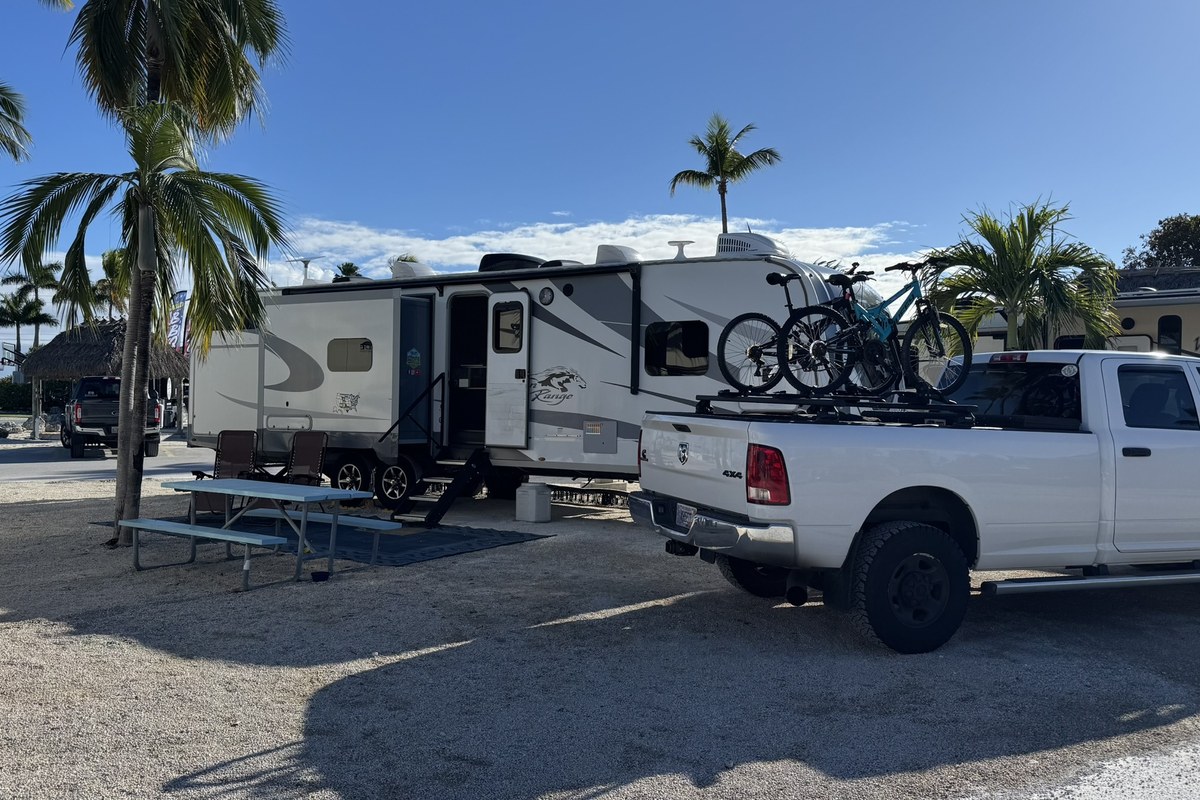
An RV travel-day checklist only helps if you use it. A long document full of tasks for equipment you do not own can be harder to follow than a short list made for your actual setup. Build your checklist around your RV, put the steps in a sensible order, and use it every time you leave.
We travel full time with a towable RV, so moving day means preparing both the trailer and the truck. Your list may look different if you travel in a motorhome, tow a car, or use different hitch and leveling equipment. Start with your owner manuals and the instructions for the systems installed on your rig.
Separate packing from departure checks
Make one part of the list about getting the living space ready. Secure loose items, close cabinets and drawers, and check that anything you moved during the stay is ready for travel. Include the refrigerator and other appliances according to their travel instructions. Think about the items that can shift or become damaged when the RV moves.
Use another part for the outside tasks. That can include putting away campsite gear, disconnecting and storing utilities, checking storage doors, and preparing slides, awnings, steps, and jacks as your equipment requires. The correct order matters. Write it down while you can refer to the manuals, rather than trying to decide it while packing up.
Give the connection steps their own space
For a towable RV, follow the approved hitching procedure for your particular hitch and trailer. Include the coupler or hitch locks, safety connections, electrical connection, and breakaway system as specified by their manufacturers. Do not treat a general online list as a replacement for those instructions.
For a motorhome or a towed vehicle, use the instructions for that setup instead. A checklist should help you carry out a procedure you understand. If you do not understand a connection or adjustment, get qualified help before traveling.
Check the things that keep you moving safely
Include a tire inspection and pressure check using the correct guidance for your loaded setup and tire equipment. Check the lights and follow the appropriate brake verification procedure for your vehicle and trailer. If something does not work correctly, stop and address it before leaving.
Keep equipment-specific numbers, such as required pressures or torque values, in a clearly labeled reference where needed. Verify those values for your own equipment. Copying a number from another RVer’s checklist can create a problem even when their advice was correct for their rig.
Take one final walk around
After the main list is complete, walk around the entire setup. Look up as well as down. Check the roofline and awning, storage doors, utility area, hitch area, tires, and anything that extends outside the normal travel position. Confirm that no hose, cord, or campsite item has been left connected or behind.
Give the inside a final check, too. Before moving, account for the people and pets traveling with you and use proper seating and restraints. A towable RV is not a passenger compartment for travel. Then review the planned route and know where you expect to stop.
Restart after an interruption
A conversation, phone call, or last-minute request can interrupt a familiar routine. When that happens, return to a clear checkpoint and verify what is complete. Mark the list as you go instead of relying on the feeling that you probably handled something earlier.
Keep your checklist on paper or in a place you can reliably access. Update it after a trip when you discover a missing step. The best version is the one that matches your equipment and earns a regular place in your departure routine. What is the travel-day check you never skip?