
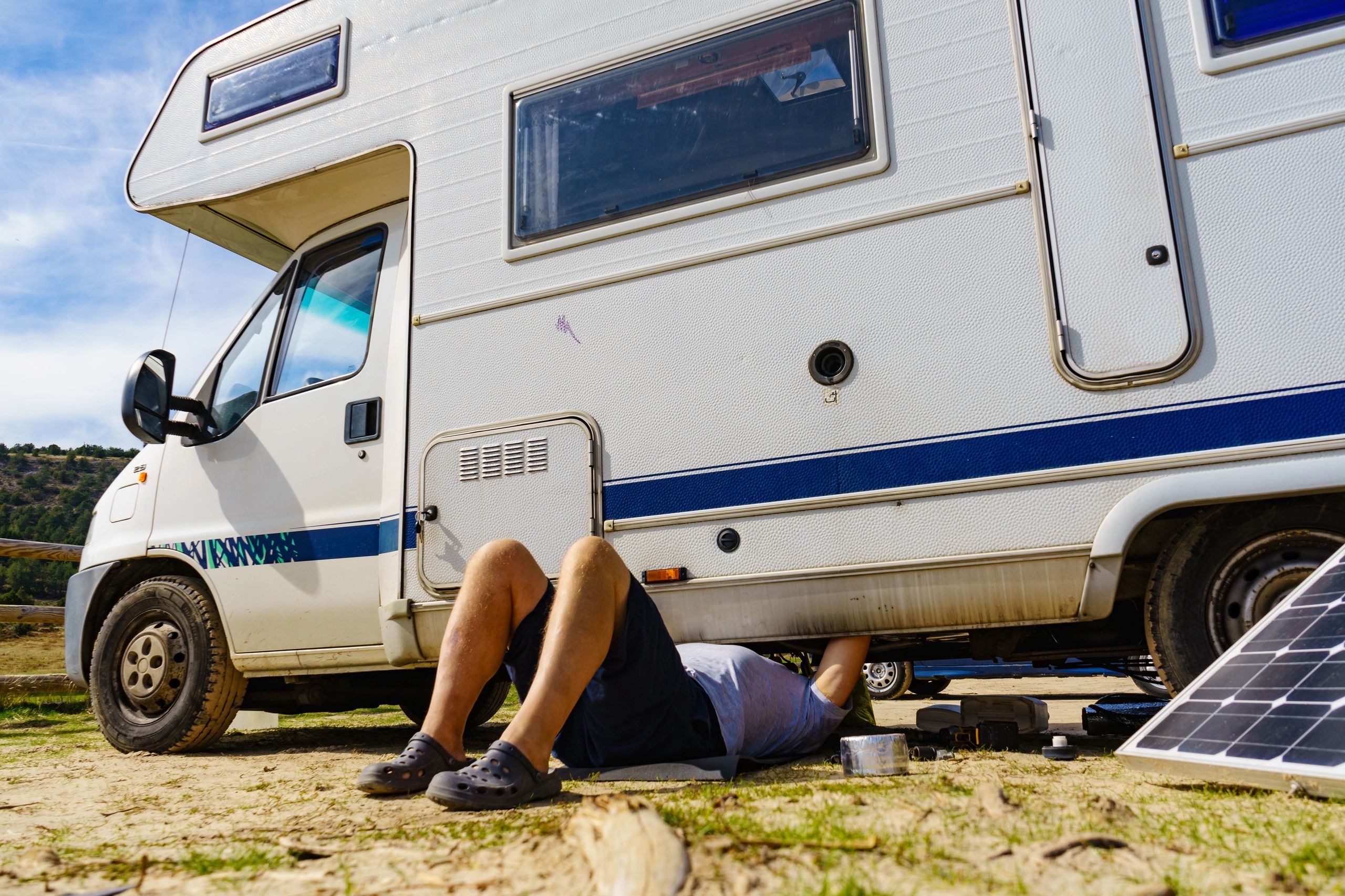
Living and traveling in an RV gives you freedom, but it also comes with responsibility. RVs are heavy, complex machines, and small problems can turn into big ones fast if they are ignored. Over the years, we have learned that staying ahead of basic maintenance is not about being perfect. It is about being consistent and paying attention.
If you are living full time in an RV or or just travel weekends and a few weeks a year, these are the RV maintenance tasks you should never ignore. They matter for safety, comfort, and protecting your investment.
Check Your RV Tires Before Every Travel Day
RV tires are one of the most critical safety items on your rig. Many RV tire failures happen not because of tread wear, but because of age, low pressure, or hidden damage. Tires should be checked before every travel day, not just when they look low.
Always check tire pressure when the tires are cold and inspect the sidewalls for cracks, bulges, or uneven wear. Pay attention to tire age as well. Even if the tread looks good, most RV tires should be replaced around the five year mark. In my opinion, ignoring tires is one of the most common and costly mistakes RV'ers make.
Do Not Ignore Brakes and Suspension Issues
Your RV’s braking system works much harder than a regular vehicle, especially when traveling through mountains or towing heavy loads. If your RV pulls to one side, makes unusual noises, or feels different when braking, it is time to investigate.
Suspension components also take a beating over time. Worn suspension parts can affect handling, tire wear, and overall safety. Waiting on brake or suspension issues almost always makes the repair more expensive later. In my opinion, brakes are never something to “wait and see” with an RV.
Inspect the Roof and Seals Regularly
Water damage is one of the most expensive and destructive problems an RV can have. Most leaks start small, often from cracked or dried sealant around vents, skylights, or roof edges.
Make it a habit to inspect your RV roof and seals regularly, especially after long trips or extreme weather. Look for cracks, gaps, or areas where sealant is pulling away. Resealing early is cheap and easy compared to repairing water damage later. This is one maintenance task that protects both safety and resale value.
Monitor Wheel Bearings and Hubs
Wheel bearings and hubs are easy to forget until something goes wrong. Overheated hubs can lead to bearing failure and serious roadside problems.
During travel days, get in the habit of checking hub temperatures at fuel or rest stops. Excessive heat is a warning sign that should not be ignored. Keep wheel bearing service on schedule based on your RV manufacturer’s recommendations. In my opinion, this simple habit can prevent some of the worst breakdowns RV'ers experience. I always inspect and and re-lube wheel bearings once a year, regardless of mileage.
Maintain Your Electrical and Battery Systems
Your RV’s electrical system keeps everything running, from lights to refrigerators to safety systems. Batteries should be checked regularly for proper charge, corrosion, and secure connections.
Loose or dirty battery connections can cause strange electrical issues that are hard to diagnose. Take a few minutes to clean terminals and ensure cables are tight. This small task can prevent a lot of frustration while traveling or boondocking.
If you plan on doing more than just staying at campgrounds (you want to boondock) I highly suggest you upgrade to a lithium-ion type battery.
Check Your Propane System for Safety
Propane is essential in most RVs, but it demands respect. Regularly inspect propane hoses for cracks, wear, or damage. Pay attention to any unusual smells and make sure appliances light properly and burn clean.
If something smells off or does not seem right, do not ignore it. Have the system inspected by a professional. In my opinion, propane safety is one of those areas where caution should always come first.
Make sure your CO (carbon monoxide) detector is working properly at all times. Test it regularly, replace batteries as needed, and never ignore alerts, since a functioning CO detector is critical for keeping your family safe inside the RV.
Stay on Top of Fluids and Torque Checks
Whether you have a drivable RV (Class A, B, or C) or you tow with your truck (5th wheel or travel trailer) engine oil, transmission fluid, coolant, and brake fluid all play a role in keeping your RV running safely. Check fluid levels regularly and follow recommended service intervals.
After tire work or wheel removal, lug nuts should be re-torqued properly. Loose lug nuts can cause wheel damage or failure. This is a simple check that is often overlooked but extremely important.
RV Maintenance Is About Consistency, Not Perfection
RV maintenance does not have to be overwhelming. It is not about doing everything at once or knowing everything. It is about paying attention and handling small issues before they become big ones.
In my opinion, a few minutes spent checking key systems can save thousands of dollars and keep your family safe on the road. RV life is about freedom, but that freedom depends on taking care of the rig that gets you there.
If you are new to RV life or have been on the road for years, staying consistent with these maintenance tasks will make every mile safer and less stressful.
If you want to see how we handle real RV life on the road, follow along on our YouTube channel. We share honest experiences, practical tips, and real-world situations so you can learn from what we are living every day. We show the good and the not so pretty side of real full time RV living.