
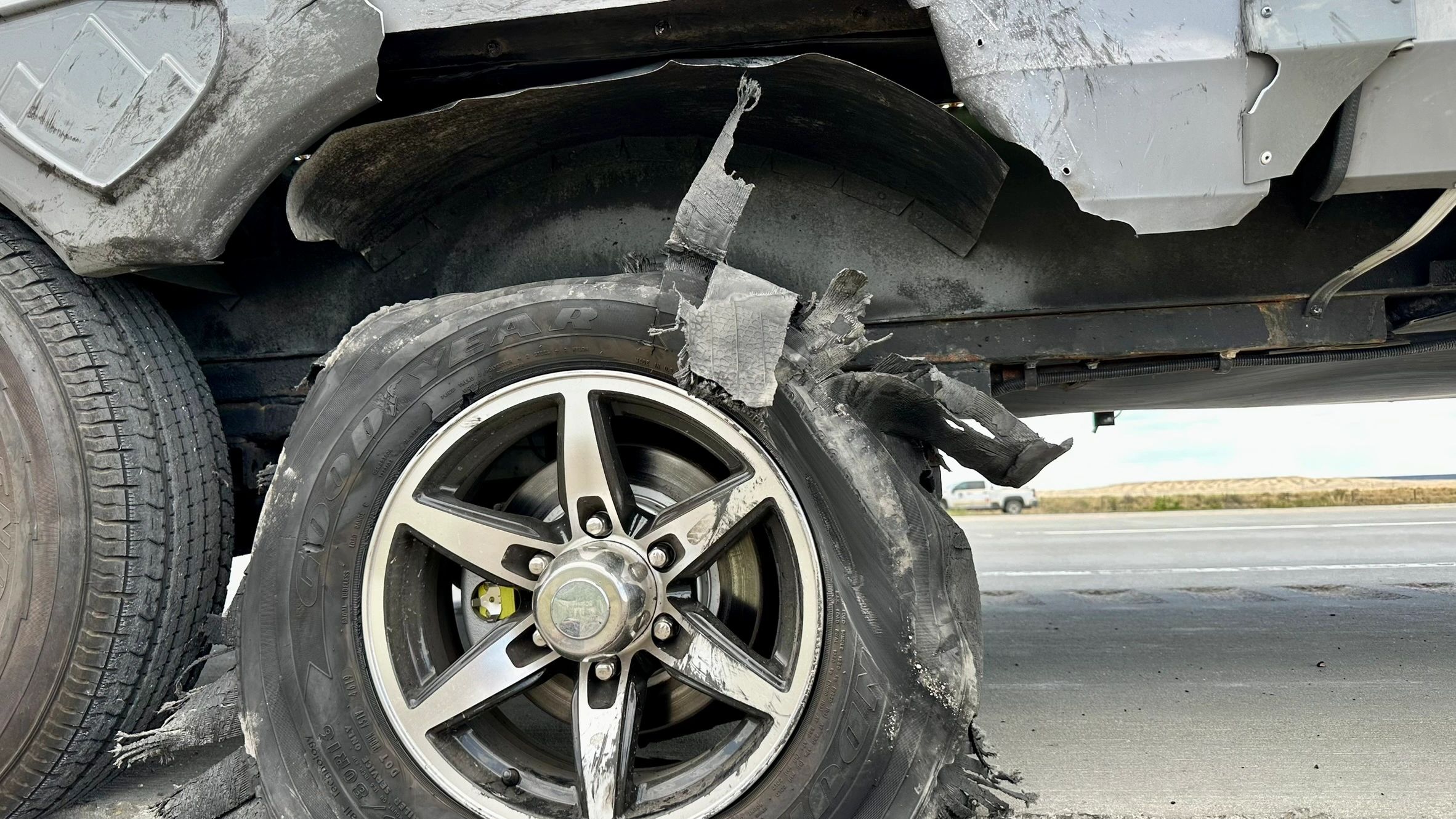
If you live or travel full time in an RV long enough, a RV tire blowout is not an if, it is a when. Ours happened in Wyoming, just outside of Rock Springs, and it was one of those moments that instantly reminds you how fast things can go sideways on the road.
We were driving on the interstate after passing through a construction zone. We heard a pop, but everything felt fine. The rig was tracking straight, no warning lights, no obvious signs of trouble. We were close to our campground, so we kept going. At the time, we did not have our TPMS on because we were dealing with valve stem issues, and that ended up being a big factor in how things played out.
About fifteen miles later, at highway speed, the tire blew.
It was the front right tire on the RV, the door side. When a travel trailer tire blowout happens at speed, it is not gentle. 5th wheel tire blowouts are the same. The blowout ripped the fender completely off, damaged the other tire on that same side, and bent up the wheel liner underneath the RV. It was loud, violent, and immediately serious.
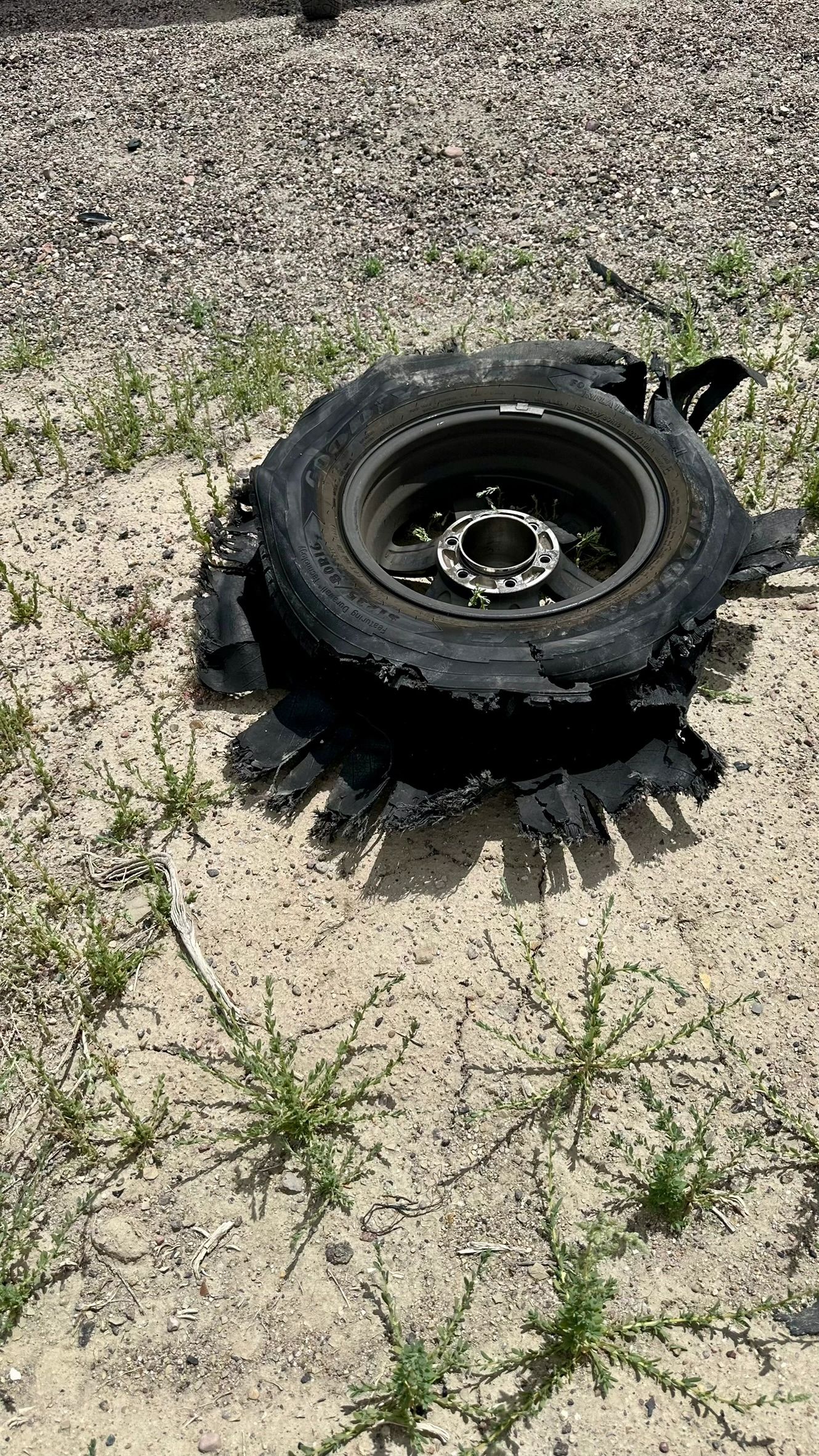
Luckily, we were able to pull over safely onto the right shoulder of the interstate, which happened to be the same side as the blown tire. That alone made a big difference. Traffic was moving fast, and stopping on the opposite side would have been much more dangerous.
We travel prepared, and that paid off. We carry a solid spare tire, a bottle jack, and a battery powered impact. Because of that, we were able to change the tire ourselves right there on the shoulder. From the time we stopped to the time we were rolling again, it took about thirty to forty minutes. It was stressful, loud, and not exactly comfortable, but we did not have to wait hours for roadside assistance.
Looking back, we are confident the blowout was caused by debris in the construction zone we had just driven through. Wyoming roads are no joke, and construction areas can be especially rough on RV tires. Even something small can do damage that you do not notice right away until it fails.
One of the biggest lessons from this experience is how important tire monitoring really is. Not having our TPMS running removed an early warning system that could have told us something was wrong before the tire failed completely. In my opinion, a working TPMS is not optional for RV travel. It is one of the best tools you have to catch problems early.
Another lesson is the value of being self sufficient. Changing a tire on the shoulder of an interstate is not ideal, but having the right tools and knowing how to use them gave us control over the situation. It also got us back on the road faster and safer than waiting it out.
Blowouts are scary, but they are also part of real RV life. They do not mean you failed or did something wrong. They mean you are putting miles on your rig. What matters is how prepared you are when it happens.
If there is one takeaway from this experience, it's this. Check your tires often. Pay attention in construction zones. Run your TPMS. And travel with the tools you need to handle problems when help is not immediately available.
We shared the full experience, including the damage and roadside repair, in our video. If you have dealt with a blowout before, or if you have tips for preventing them, we would love to hear your experience. Highway Blowout Forced Us Into Emergency Repairs | Full Breakdown