
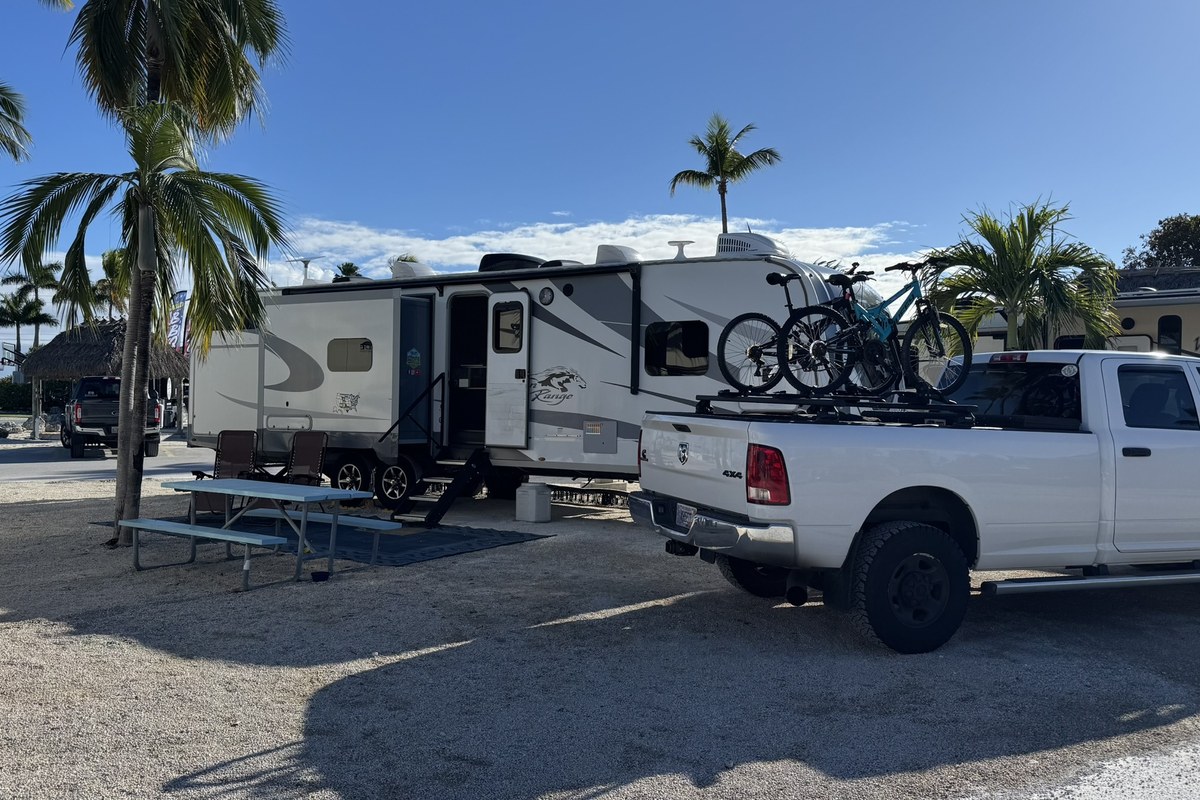
Pulling into a campground should feel like the start of your trip. For a new RV owner, it can also feel like a test. There is a site to get into, equipment to connect, and a growing list of things you do not want to forget. The best way to make arrival easier is to slow down and follow a routine built for your own RV.
Our family began traveling full time in January 2025. RV life puts the everyday tasks right alongside the adventures. Setting up camp is one of those tasks worth learning well, because a calm arrival gives everyone a better start to the stay.
Walk the site before positioning the RV
Before you settle on a parking position, get out and look. Check the ground, overhead branches, utility connections, and space for slideouts, doors, and the awning. Look for anything that could interfere with backing in or moving around the site. A pad can be long enough for the trailer while still leaving an awkward place for the truck.
Think about where the RV needs to sit before disconnecting a tow vehicle. Can your power cord and water hose reach without being stretched? Is there room to open the storage compartments you will need? Making an adjustment now is easier than discovering the problem halfway through setup.
Give everyone a clear job
One person should direct the maneuver while the driver concentrates on moving the RV. Agree on hand signals or another reliable way to communicate before starting. If the driver loses sight of the spotter or does not understand a signal, stop. Keep children and pets in a safe place away from the moving rig.
There is no prize for backing into a campsite in one attempt. Get out, look again, and reposition if needed. Other campers can wait. Protecting your family and equipment matters more than looking experienced.
Use the instructions for your equipment
Leveling, securing, unhitching, and extending slides need to follow the instructions for your RV and its installed systems. Different equipment can require a different order. Ordinary stabilizer jacks are not a substitute for a leveling system. Keep the relevant instructions where you can find them without digging through a pile of paperwork.
Write a short setup checklist for your specific rig. Include the steps you actually need and put them in the correct order. A checklist copied from someone with a different RV can leave out an important detail or tell you to do something your equipment does not support.
Finish the essentials before decorating the campsite
Handle your approved setup steps and utility connections before putting out chairs, a rug, or other camping gear. Check connections for obvious problems and use the instructions supplied with your electrical and water equipment. If a connection looks damaged or you are unsure about it, ask the campground staff before using it.
Once the main tasks are complete, walk around the RV again. Look at clearances, storage doors, hoses, cords, and anything you moved during arrival. Check inside for items that shifted during travel. This last pass helps you catch the small things before you settle into the evening.
Make the next arrival easier
After your first stay, update the checklist with anything you missed or found confusing. You are building a routine you can repeat, not trying to memorize every possible RV task at once. Keep it simple enough that you will actually use it.
Before your next trip, practice the equipment steps you can safely practice at home. Read the parts of the manual that apply to arrival. A little preparation gives you more room to enjoy the part you bought the RV for. What part of campsite setup still feels confusing to you?